 ListsLook
From Kitty Hawk to Hypersonic: 10 Flights That Changed Air Travel
The History of Aviation: A Century of Skyward Innovation

For thousands of years, humans looked at the sky and dreamed of flying like birds.
The history of aviation is a testament to human curiosity, daring engineering, and the desire to connect the world.
In just over a century, we went from wooden gliders to supersonic travel and autonomous drones.
Let's explore 10 landmark flights that changed air travel forever.
See how these historic design milestones compare to fashion through time to appreciate how technology and culture evolve together.
1. The Wright Brothers' First Successful Flight (1903)

On December 17, 1903, at Kitty Hawk, North Carolina, Orville and Wilbur Wright achieved the impossible.
They completed the first sustained, controlled, powered flight of a heavier-than-air aircraft.
Their wooden Flyer stayed airborne for 12 seconds and covered 120 feet, laying the foundation for modern aerospace engineering.
Read about the biography of the Wright brothers on Wikipedia.
2. Louis Blériot Crosses the English Channel (1909)

French pioneer aviator Louis Blériot made history on July 25, 1909, by flying across the English Channel.
Piloting his self-designed Blériot XI monoplane, he covered the 37-mile distance in approximately 36 minutes.
This flight proved that open bodies of water were no longer barriers, demonstrating the military and commercial potential of aircraft.
3. The First Scheduled Airline Service (1914)

The St. Petersburg–Tampa Airboat Line launched the world's first scheduled commercial passenger airline service on January 1, 1914.
Using a Benoist XIV flying boat, pilot Tony Jannus carried passengers across Tampa Bay, Florida, in just 23 minutes.
This historic flight proved that aviation could be a viable, time-saving alternative for everyday transportation.
4. Charles Lindbergh's Transatlantic Solo Flight (1927)

In May 1927, American aviator Charles Lindbergh completed the first solo, non-stop transatlantic flight.
Flying the custom monoplane Spirit of St. Louis, he traveled from New York to Paris in 33.5 hours.
This flight captured the world's imagination, proving that long-distance air travel was physically and technically possible.
5. The Douglas DC-3 Changes Everything (1935)

Introduced in 1935, the Douglas DC-3 is widely considered the aircraft that made passenger flight comfortable and profitable.
It was fast, reliable, and featured a spacious cabin, allowing airlines to operate without government mail subsidies.
The DC-3 revolutionized travel times, making coast-to-coast flights popular and accessible.
6. The Comet and the Jet Age Begins (1952)

The de Havilland Comet entered commercial service in 1952, marking the official beginning of the commercial Jet Age.
As the world's first passenger jetliner, it featured a pressurized cabin, large windows, and ran at speeds far exceeding piston-engine planes.
It drastically reduced flight times and set the stage for all future jet airliner developments.
7. Boeing 707 and Mass Air Travel (1958)

The Boeing 707, which entered service in 1958, truly democratized air travel on a global scale.
It was larger, faster, and much more fuel-efficient than its predecessors, allowing airlines to offer lower ticket prices.
The success of the 707 helped establish Boeing as a leader in commercial aviation for decades.
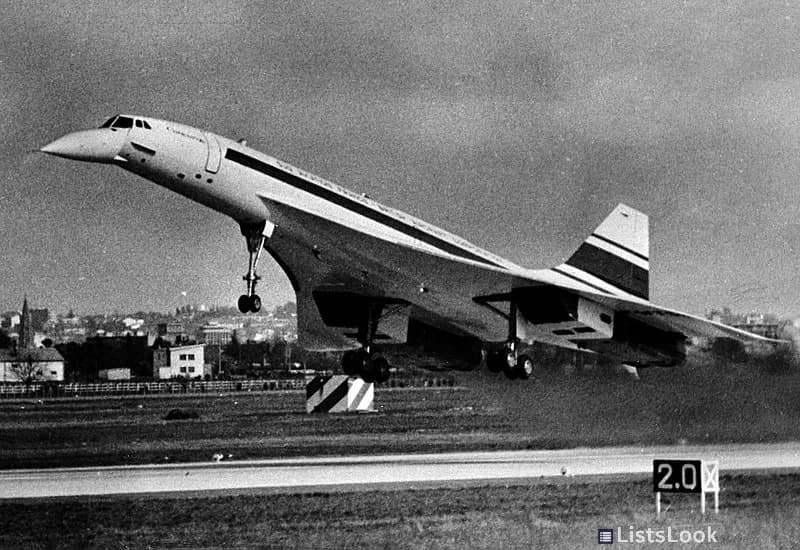
8. Concorde: The Supersonic Revolution (1969)

The Concorde, a joint British-French project, made its first flight in 1969 and entered service in 1976.
Cruising at twice the speed of sound (Mach 2), it could cross the Atlantic from London to New York in under 3.5 hours.
Although it retired in 2003 due to high operating costs, the Concorde remains an icon of aviation luxury and ambition.
Learn about the design and history of Concorde on Wikipedia.
9. The Airbus A380: A Giant of the Skies (2007)

Entering service in 2007, the Airbus A380 is the largest commercial passenger airplane ever built.
The double-deck, wide-body airliner was designed to carry up to 853 passengers, offering unparalleled spaciousness and luxury.
It allowed airlines to maximize capacity on high-demand, long-haul routes between major global hubs.
10. The Rise of Autonomous Flight (2010s-Present)

The 2010s marked the rapid expansion of unmanned aerial vehicles (UAVs) and autonomous flight technology.
Modern drones are reshaping industries from aerial filmmaking and agricultural mapping to search-and-rescue operations.
This technology represents a major shift toward automated, electric flight systems that will define the future of urban mobility.