 ListsLook
Why Ancient Sewage Systems Are More Important Today Than Ever

10 Ancient Inventions Still Shaping Our Modern World
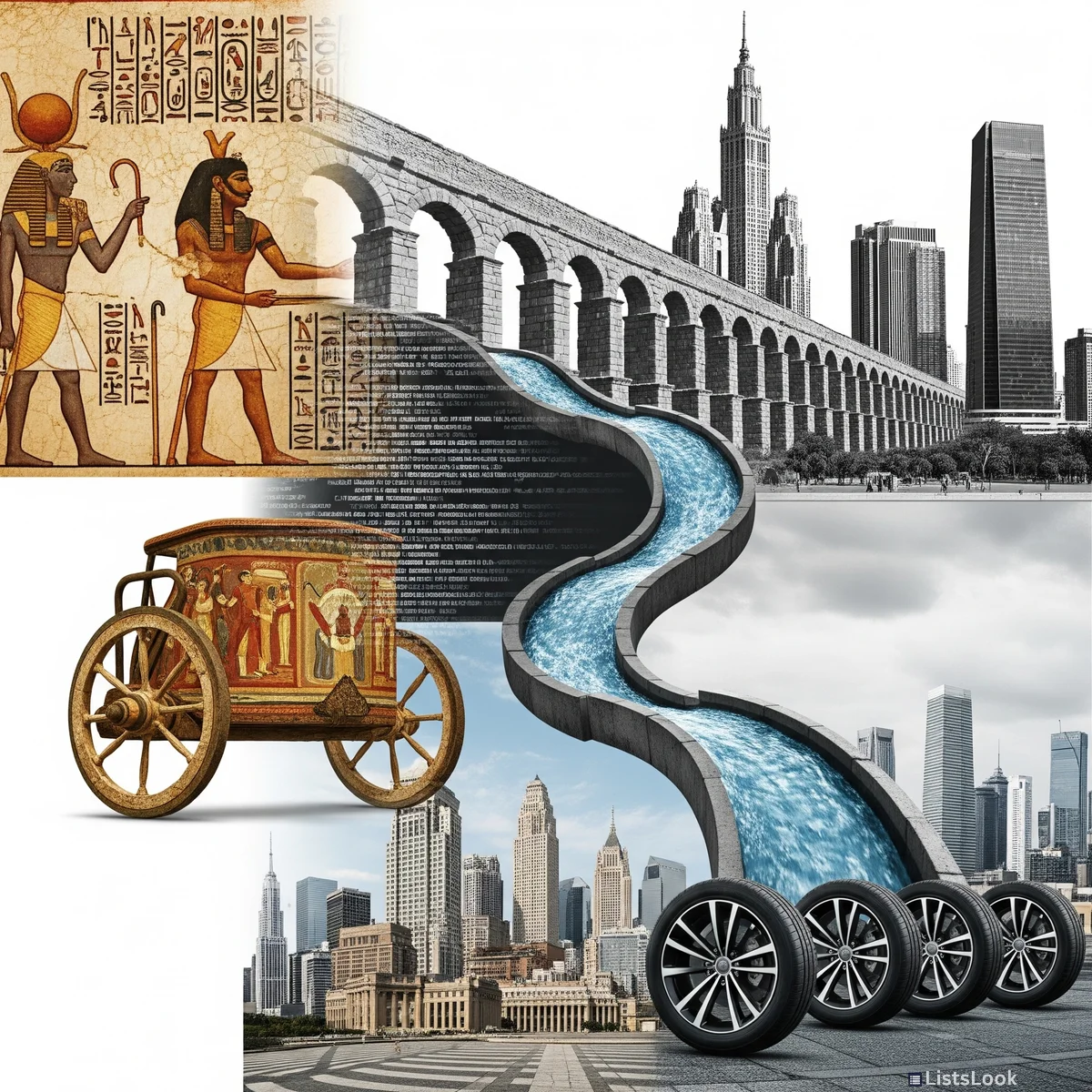
When we think of ancient civilizations, we picture primitive tools and simple structures. Yet, the underground sewage networks built by ancient Rome and the Indus Valley remain the direct foundation of modern public health today.
In fact, many of our most basic daily tools have surprisingly deep roots. From the wheel to concrete, here are 10 ancient inventions still shaping our modern world.
To see how these concepts evolved in other industries, read how historic flights changed air travel in our comprehensive aviation history.
1. The Wheel
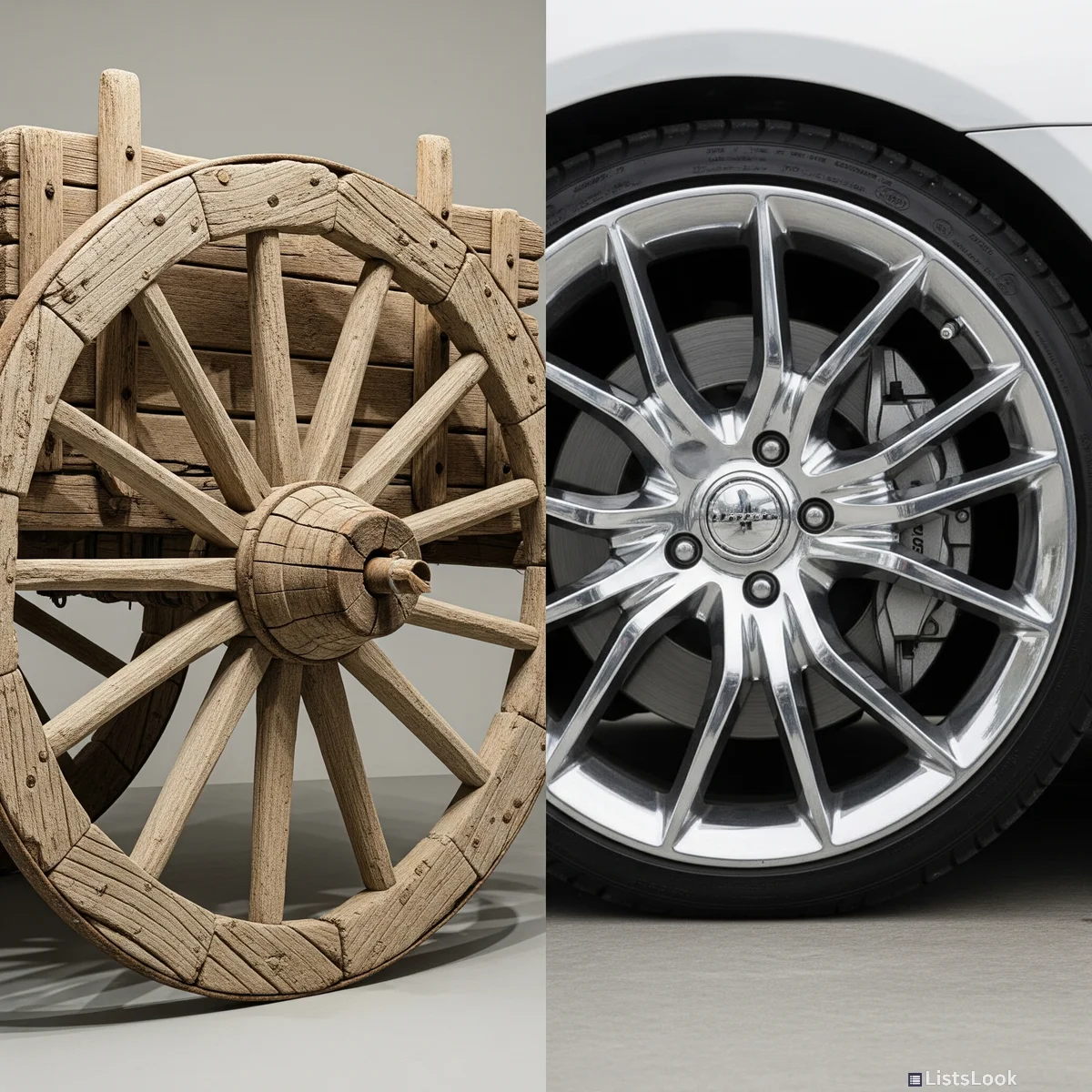
First invented around 3500 BCE in Mesopotamia, the wheel was originally used for pottery rather than transportation.
Today, it is the foundation of almost all modern transportation, from cars and trains to complex industrial gears.
Its simple, mechanical design remains completely unchanged after thousands of years of human progress.
2. Concrete
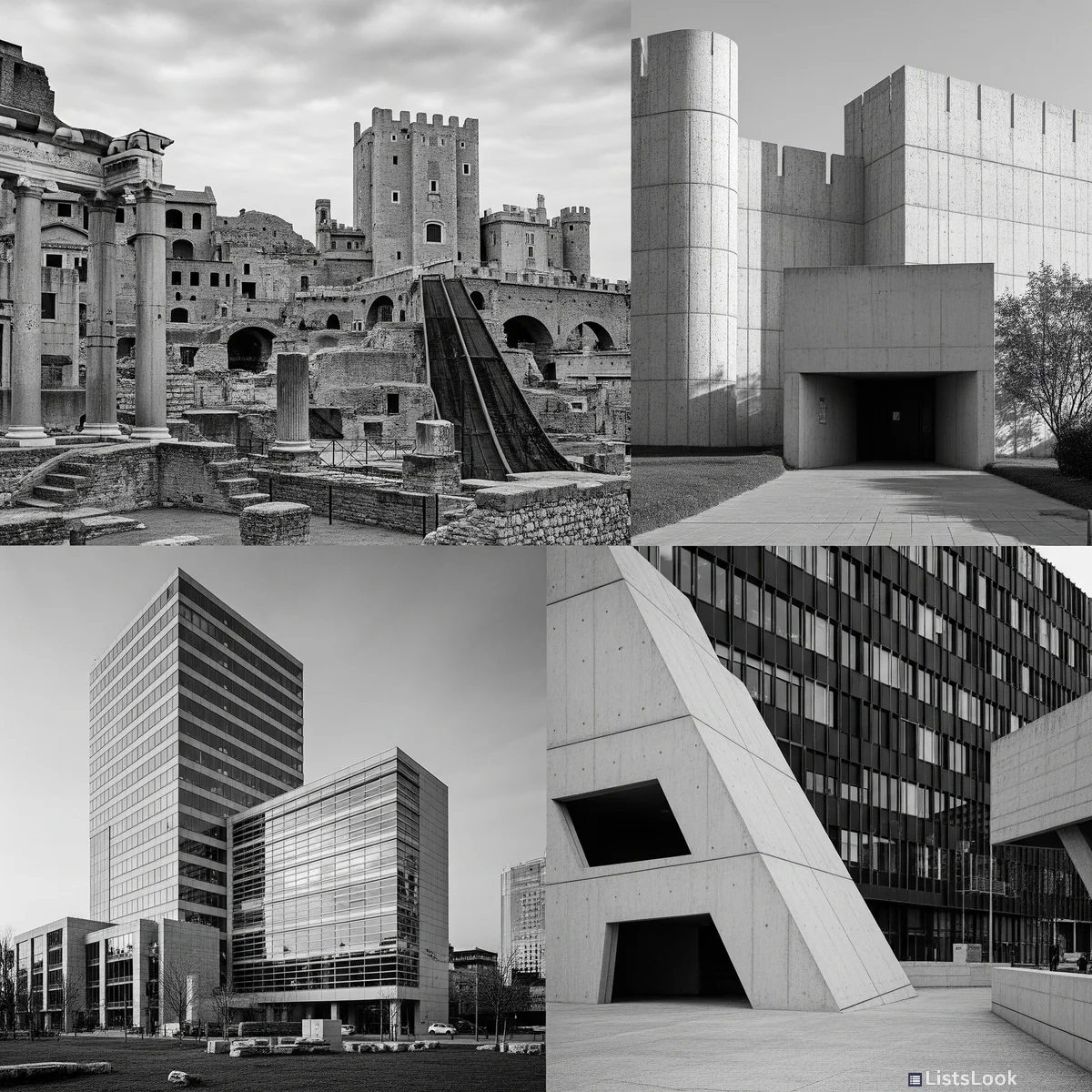
The ancient Romans developed a highly durable form of concrete using volcanic ash and lime.
Their structures, like the Pantheon, still stand today, proving the incredible strength of their formula.
Today, concrete is the most widely used man-made material on the planet, forming the basis of modern cities.
3. The Alphabet
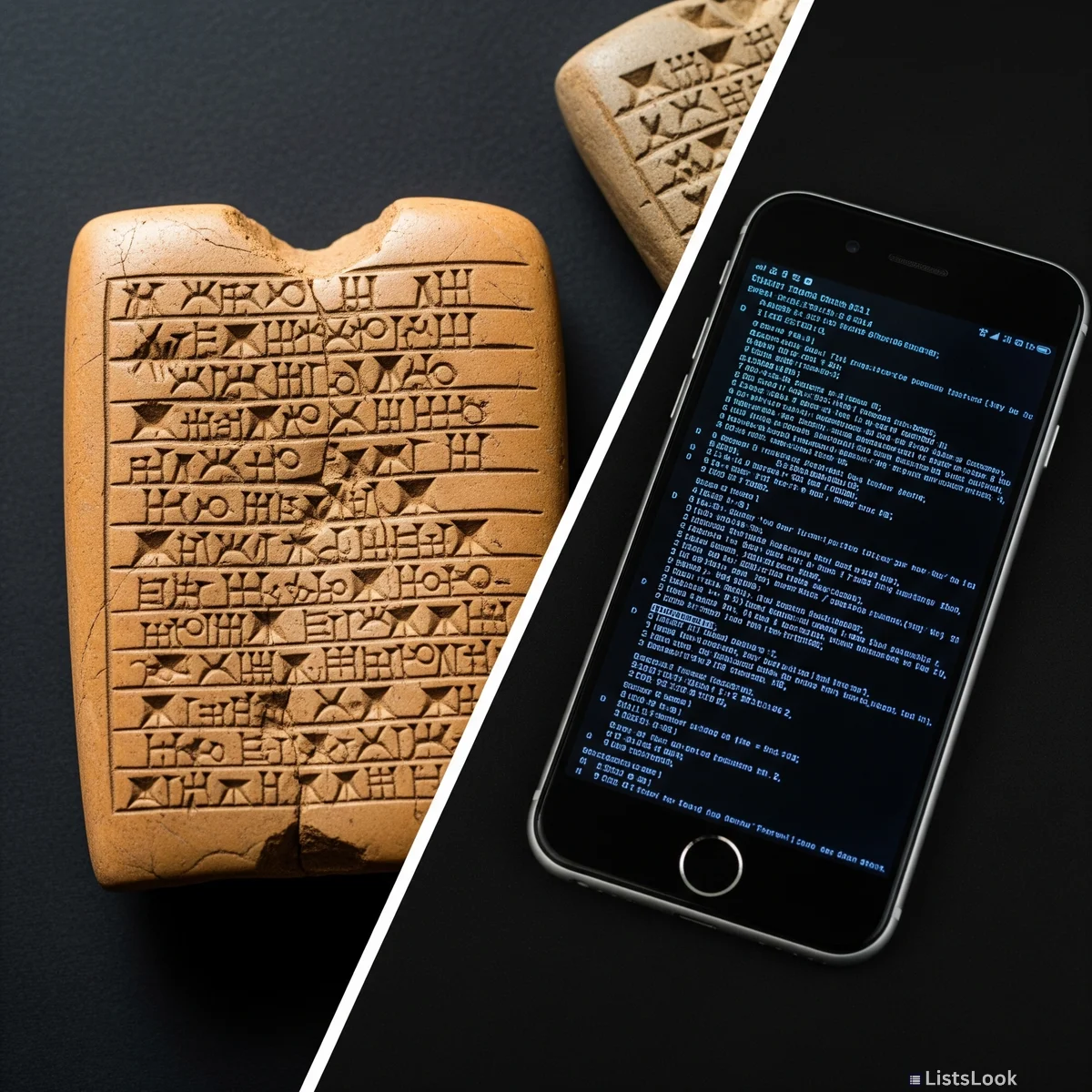
Developing from Phoenician script around 1050 BCE, the alphabet simplified writing and reading.
Before this, written systems relied on thousands of complex symbols that only a few scholars could master.
This ancient system revolutionized human communication and remains the basis of written language today.
4. Clocks

Ancient Egyptians used obelisks as sundials to track the sun's shadow, dividing the day into parts.
Later, civilizations developed water and sand clocks to keep time during the night or cloudy days.
These early methods laid the groundwork for the mechanical and digital clocks we rely on today.
5. Paper
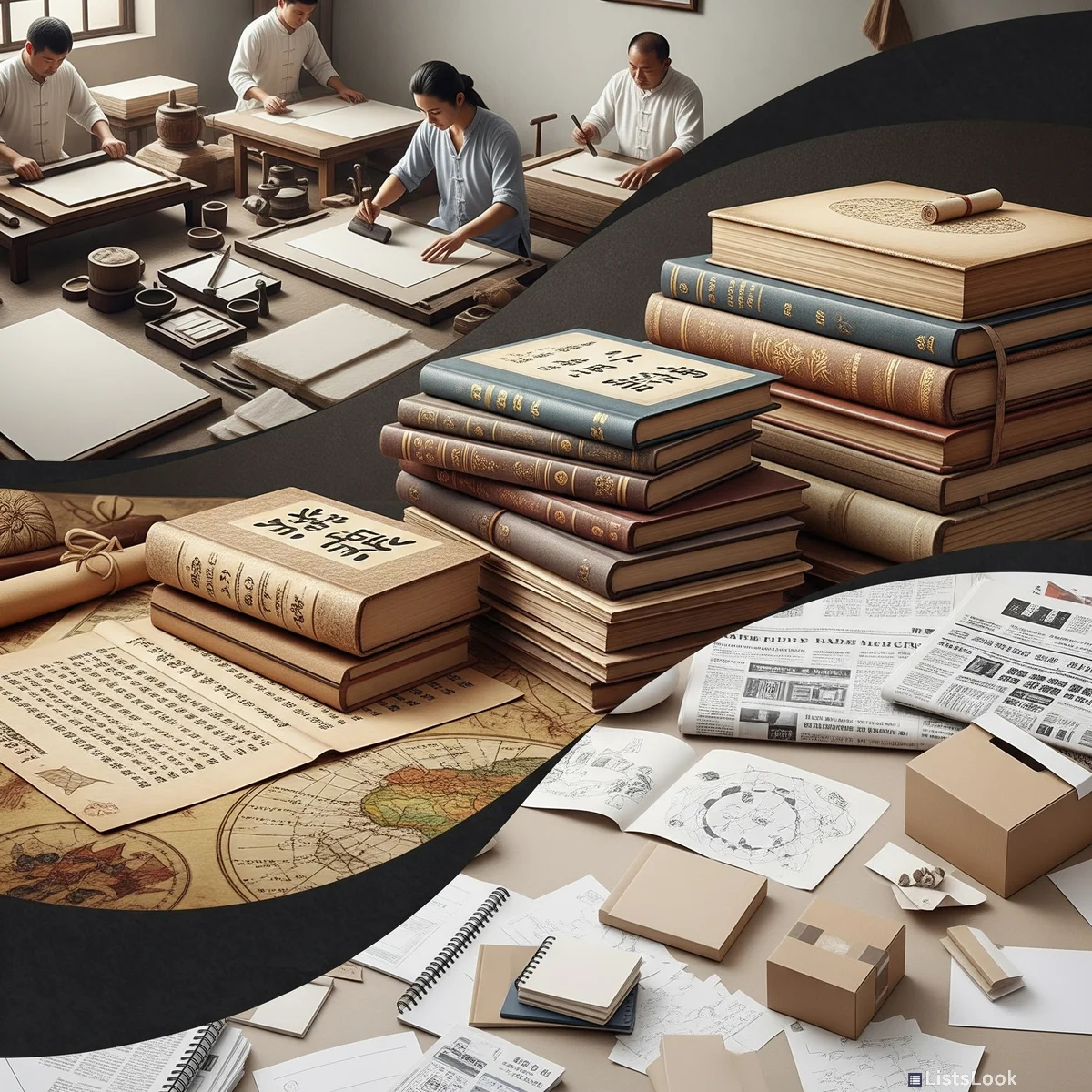
Paper was invented in China during the Han Dynasty around 105 CE, replacing heavy bamboo and silk.
This lightweight material made it easy to record, duplicate, and distribute written knowledge.
It remains an essential part of daily life, from books and packaging to official documents.
6. Sewage Systems

Ancient civilizations in the Indus Valley and Rome built underground sewage networks to drain waste.
These engineering marvels were crucial for preventing the spread of deadly waterborne diseases in crowded cities.
Modern sanitation systems still utilize the same basic gravitational flow principles established by these ancient engineers.
7. Irrigation Systems

Ancient Egyptians used the Nile’s annual flooding to develop early irrigation canals.
This allowed farming in dry areas, feeding growing populations and supporting the rise of empires.
Today’s automated farming systems still rely on these basic water management concepts. Learn more about agricultural history on Wikipedia.
8. Scissors
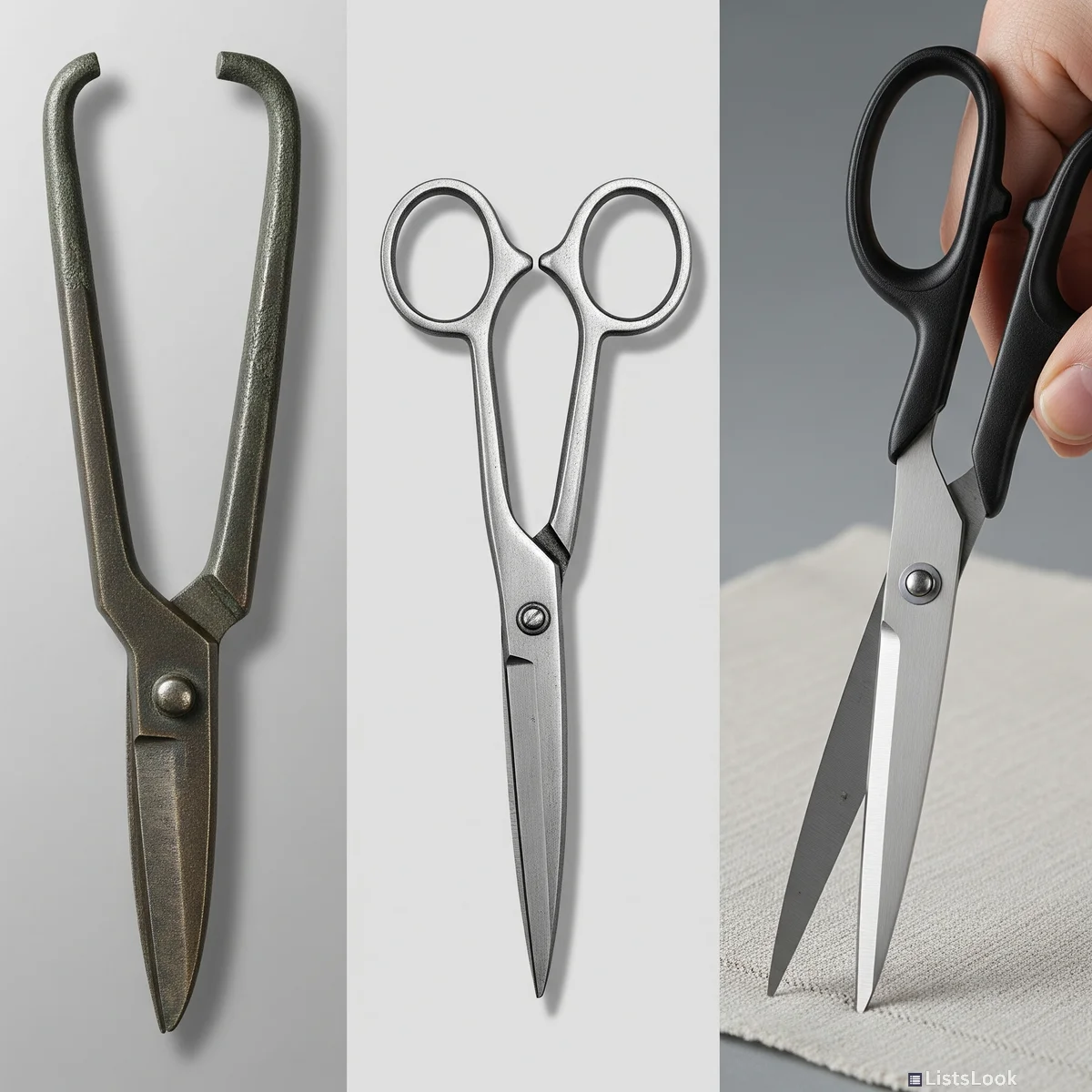
Invented in ancient Egypt around 1500 BCE, the earliest scissors were made of a single piece of metal.
The Romans later improved this design by introducing the pivoted blades we use today.
This tool remains virtually unchanged, proving the timeless utility of simple mechanical designs.
9. Mirrors
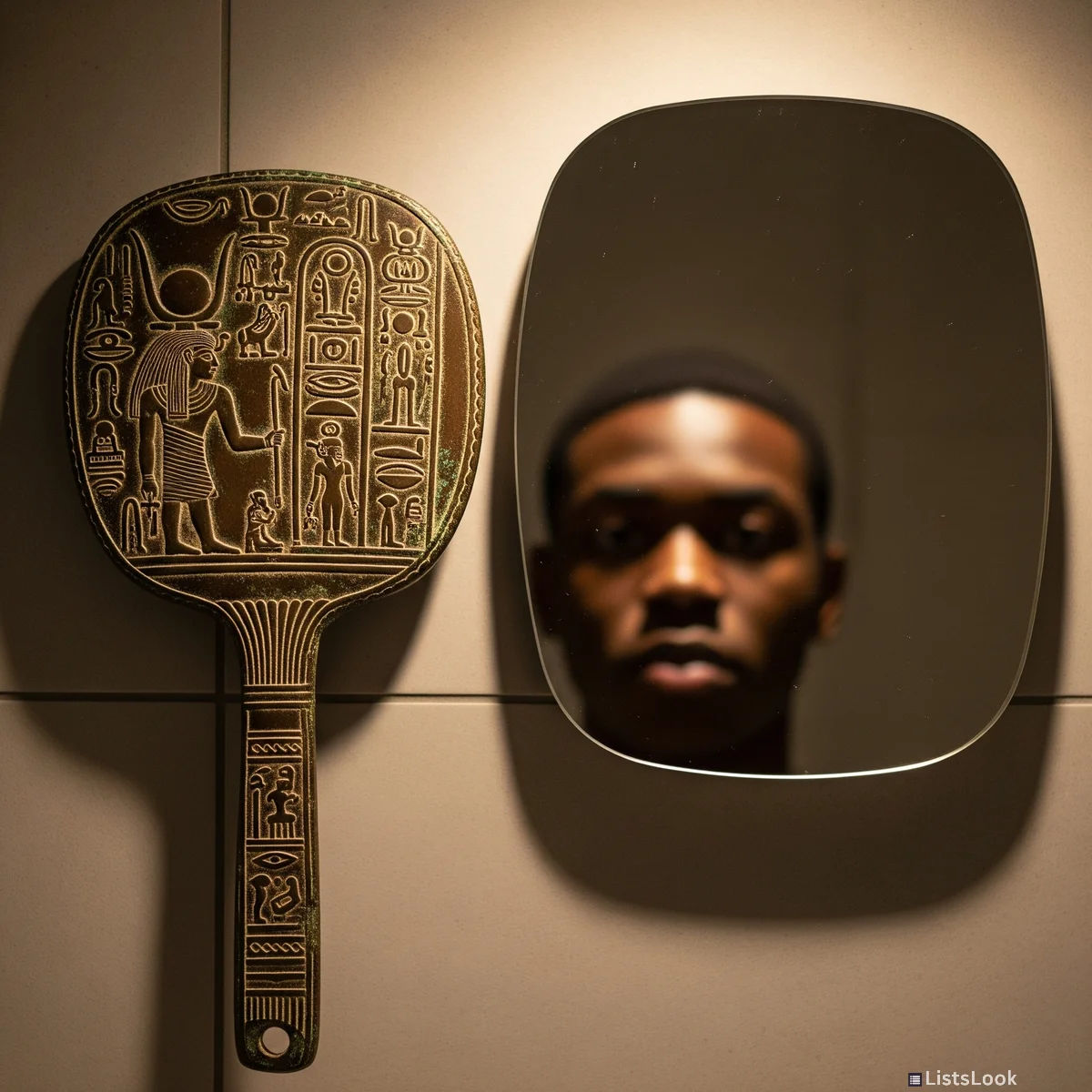
People in Anatolia crafted the first mirrors from polished volcanic glass called obsidian.
Later, Romans and Egyptians manufactured metal mirrors from polished bronze or silver.
Today, glass mirrors are essential for everything from personal grooming to advanced telescopes. Read more on the history of mirrors online.
10. Ancient Roads
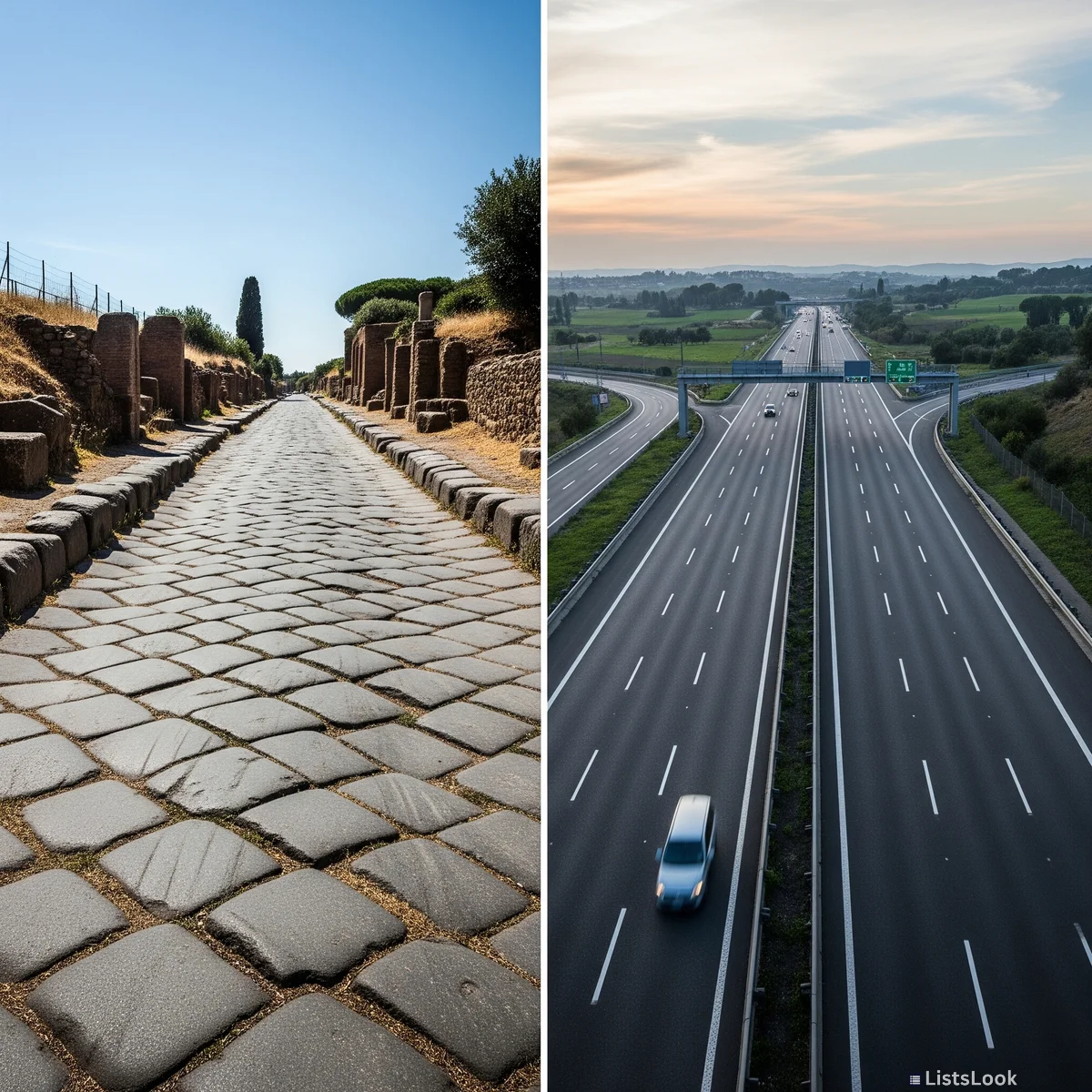
The Roman Empire built over 50,000 miles of stone-paved roads to connect its vast territories.
These roads utilized multiple layers of gravel, sand, and stone to ensure durability and drainage.
Many of these ancient routes are still used as the foundation for modern highways across Europe. Learn more on Wikipedia.